Mosaics
To the beauty we've made from shards.

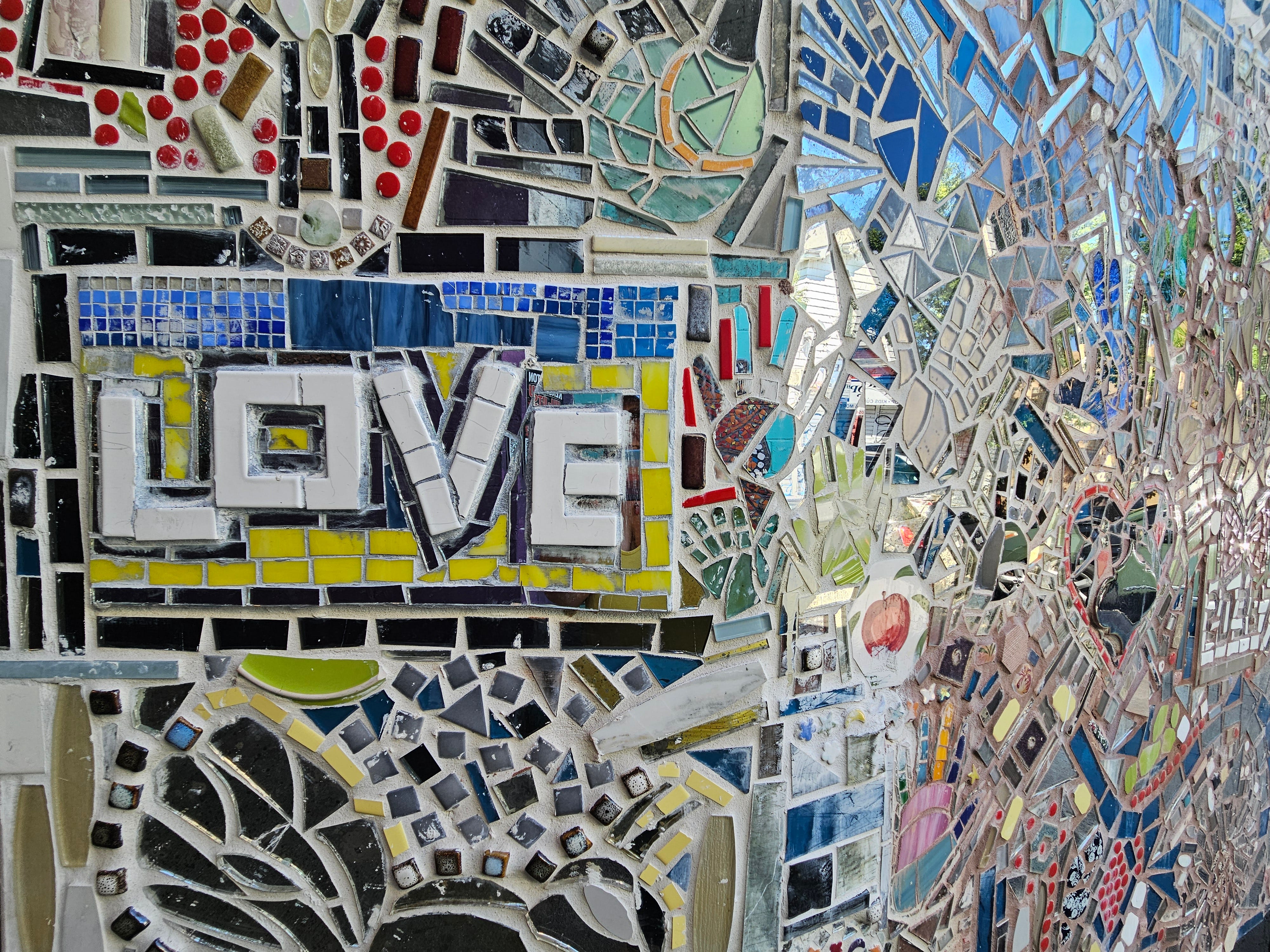
Near our Brooklyn, New York apartment, there’s a small tunnel that often occupies my thoughts. Its entrance and exit points are a bit hard to find, as they are nestled within the deeply mundane — a nondescript side street at one end, the entrance to catch the B and Q trains at the other. But for a moment, as you make your way from road to subway, you’re briefly transported into a miniature shimmering wonderland.
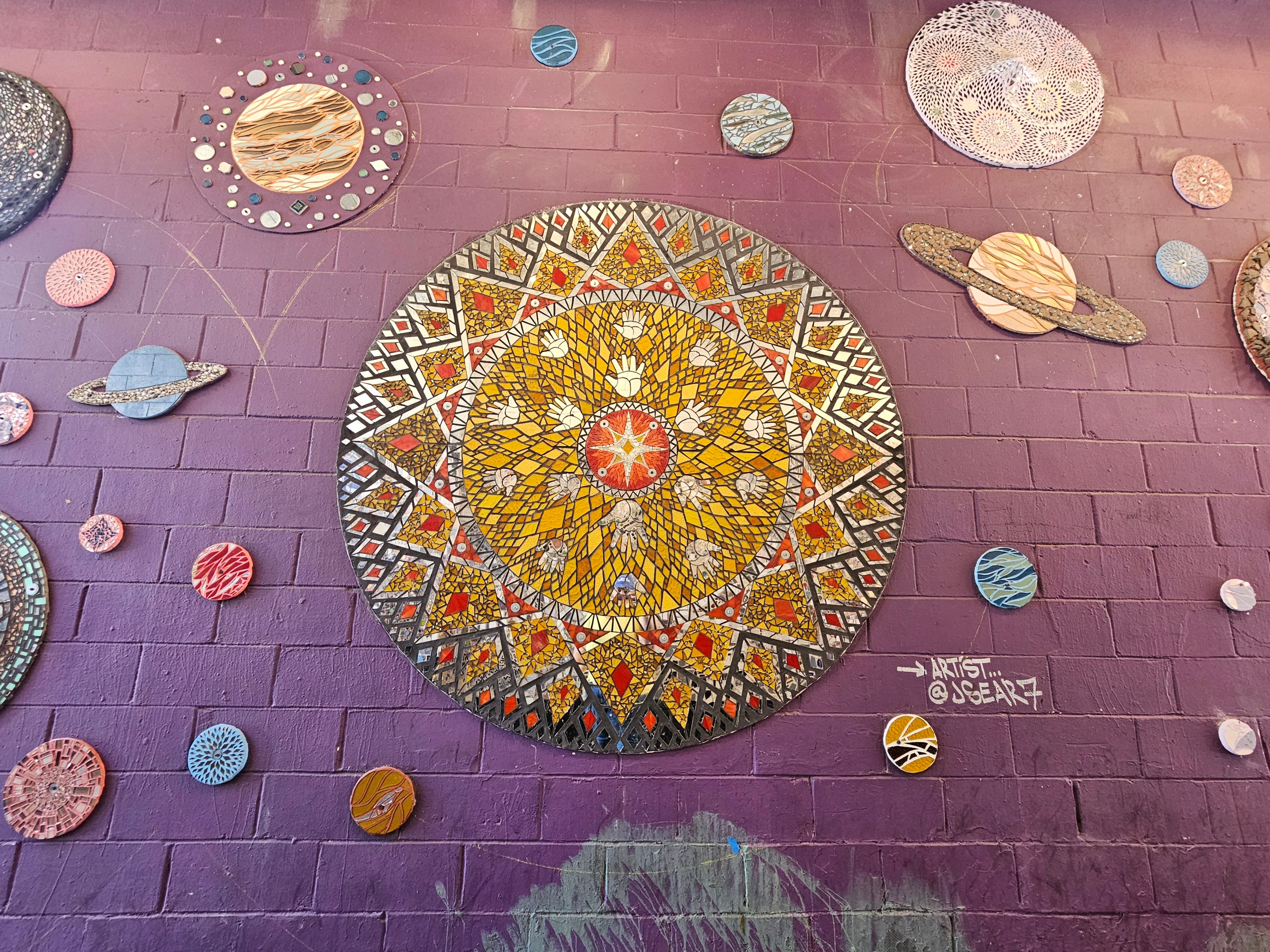
Because the entirety of this small, shaded path is adorned with intricate mosaics. Bits of tile, pebbles and so much more, all in a stunning rainbow of colors, are used to create shapes and swirls and people and guitars and messages of love that stretch from ground to ceiling. There is even a tableau of our solar system (including some far-flung residents of the Kuiper Belt, I think), with a massive, intricate, reflective sun at its center that is made almost entirely out of fragments of mirrors.
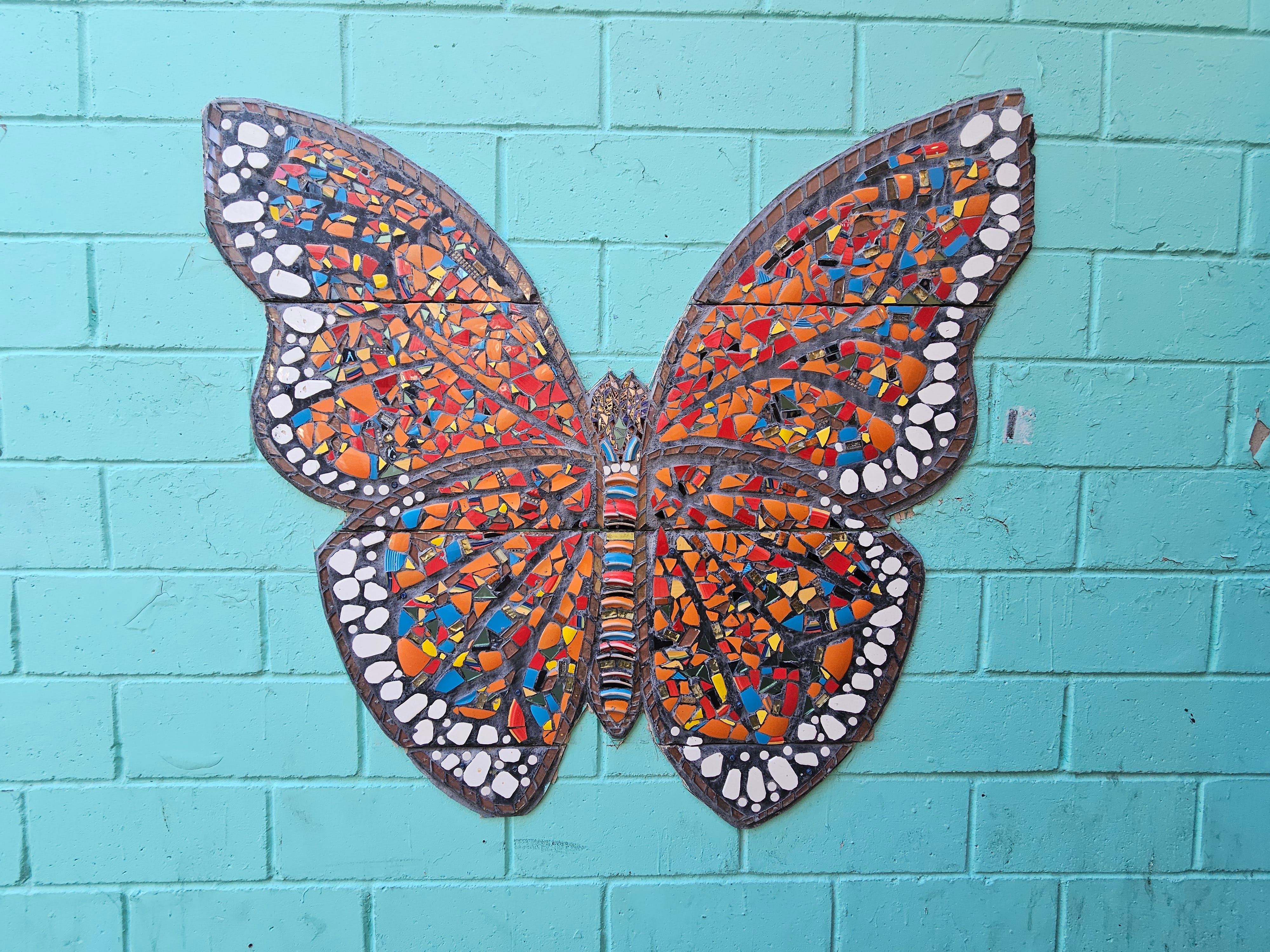
On my most recent walk through this tunnel, I was inspired to pull off to the side of the path — positioning myself somewhere between the makeshift cosmos and a tiled butterfly whose size rivals my 7-year-old son’s — so that I could read a bit about the history of mosaics. How did I come to be surrounded by all of this, I wondered?
The practice, it turns out, dates back to ancient Mesopotamia, with its beginnings estimated to be around the 3rd millennium BC. Even after I put my phone away, my curiosity slaked, I found myself unable to proceed home immediately in light of this. I just needed to spend a little more time considering the utter magic around me.
This form of creation — the one surrounding my 21st-century self, whose questions can be answered by a rectangle of light that fits inside her jeans pocket — unites me and all of us to a people who lived and ate and grew up and loved and fucked and ultimately died in a place that, by name, no longer exists, at a time so long ago it feels as impossible to reach for mentally as the real planets represented by the fragmented tiles plastered along those tunnel walls.
I found myself falling quickly, deeply in love with the interconnectedness — and the metaphor — of it all.
Because, I just love the idea that we humans so consistently seek to make something beautiful out of that which is broken, that this trait unites us with those who have been dead for thousands upon thousands of years.
And, I love the idea of taking broken mirrors — an age-old harbinger of bad luck — and transforming a misfortune that can cut you… into the star that has given all of us life, from those Mesopotamians to us today. I love the idea of using what many might consider to be garbage, total waste, and repurposing it into a bit of wonder whose sole purpose is to delight passers-by making their way from end to ordinary end.
I love the idea that people have, for centuries, gathered the remnants, the irregular pieces, the seven-fold bits of bad luck, that which is jagged and colorful and slightly-dangerous, that which has been dismissed as worthless… and built wings to fly us all someplace new.
They’ve built metamorphosis, using only the discards.
And, I love that none of it — none of this connection to our ancient past, none of this creation for the moment, none of this artistic hope for a fantasy future — can happen until you break some shit first.
Sometimes that’s just the way of it.
Reminds me of the Japanese art of kintsugi - mending broken pottery with golden lacquer so the fracture and its repair become a part of the larger history of an object.
Beautiful observation. This will stick with me for a while